Written by EVEC Academy volunteer.
What if one phone call, a shared activity, or a little help with a smartphone could make someone feel less alone? Older people do not always need an expert to help them. Sometimes, they simply need someone who is willing to sit with them, listen to their stories, and have a genuine conversation. You can help make this happen through volunteering with older people in Greece. You do not need special skills or a lot of money. You just need time, patience, and a willingness to listen.
Teenagers: Start with Your School
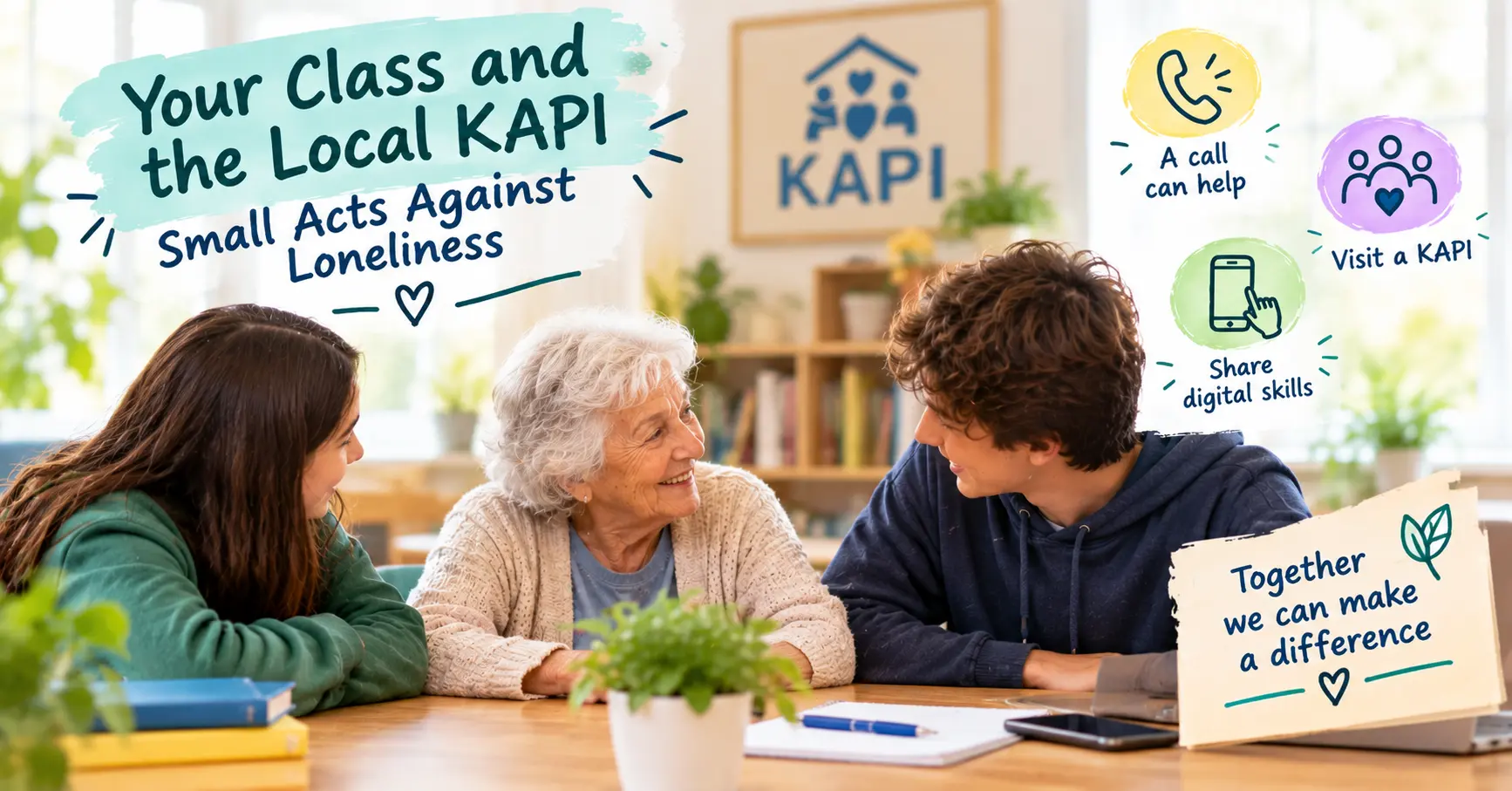
If you are between age 13–17, your school can help you find a safe way to connect with older people. Ask a teacher whether your class could organise a supervised visit to a local KAPI, a Greek community centre for older people. You should never visit a vulnerable person alone, and a responsible adult must be present.
This idea is based on a real activity in Greece. In March 2026, the Municipality of Lokron organised visits by primary-school pupils to KAPI centres in Malesina and Atalanti. The children has brought letters and drawings, asked questions, sung, danced, and painted with older people. You could ask your school and municipality whether they can arrange a similar activity for your class. These meetings give older people a chance to share their experiences and enjoy time with younger generations. You can learn to listen, communicate, and understand people whose lives may be very different from yours.
Read the Municipality of Lokron’s official report.
You could also ask a local KAPI whether it would welcome a school-organised digital help session. With the centre’s permission and an adult supervising, students might prepare simple instructions for making video calls, saving contacts, or increasing text size on a phone. Greece has an official Digital Empowerment Programme that aims to help older people and people with disabilities develop digital skills. A student-led session would be a separate activity, not part of that government programme. Helping someone use a phone could make it easier for them to contact family and manage everyday tasks independently.
These activities can help you develop patience, teamwork, and communication skills. They also give you practical experience of community involvement that you can later include on your CV.
University Students: Make Time for Regular Contact
If you are a university student, you can look into more regular volunteering through an established programme.
One option is Filia se kathe Ilikia, meaning “Friendship at Every Age”. The programme aims to reduce loneliness and social isolation among older people. Volunteers build connections with older people through regular contact, including weekly communication, and receive training and guidance from the Prolepsis Institute.
The programme’s official website says that school and university students can participate through their educational institutions or independently, in coordination with the Institute. If you would like to join, contact the organisers to ask about current opportunities and the steps involved. If you are under 18, confirm whether you are eligible before applying and arrange participation through your school with appropriate adult supervision.
A regular conversation can give an older person someone familiar to talk to and something to look forward to. You do not have to solve every problem; listening and showing genuine interest can be meaningful in themselves.
Read the programme’s information for students and university students.
You could also contact your university’s volunteering office or a nearby KAPI to ask whether it needs help with a supervised social or digital-skills activity. If you are comfortable using smartphones, you might help older participants practise making video calls or saving family contacts, provided the centre agrees. Never handle another person’s passwords, banking details, or private accounts.
These experiences can strengthen your communication, organisation, and problem-solving skills. They can also introduce you to people with different experiences and perspectives.
Adults: Offer Practical Help and Keep Showing Up
If you are an adult, you may be able to offer something especially valuable: regular, reliable support. You do not need to organise a large project. Start by finding out what older people in your community need.
You can apply to volunteer with Filia se kathe Ilikia. The programme offers ways to support older people through regular contact and operates a telephone line for people experiencing loneliness. Volunteers on the line receive specialised training and supervision. The programme’s website provides a volunteer application form, but you should contact the organisers to confirm the current arrangements and the role that suits you.
Explore the official volunteer page.
Another option is to contact your municipality’s social services department or a nearby KAPI. Ask whether volunteers are needed for organised social activities, community gatherings, or approved assistance with everyday errands. KAPI centres provide social, educational, and recreational activities to help older people remain active and connected. The opportunities available will depend on the centre, so check before making plans.
Read the Greek government’s information about KAPI centres.
Through regular volunteering, you can build communication, planning, and teamwork skills. You may also develop meaningful friendships and feel more connected to the people in your local area.
Take the First Step
You do not have to solve loneliness on your own. If you are at school, speak to a teacher. If you are at university, contact your volunteering office or an established programme. If you are an adult, ask your municipality or nearest KAPI about organised activities.
Before you begin, check the age requirements, supervision arrangements, and training needed for the activity you choose. Then make time to listen, learn, and keep showing up.
One conversation cannot solve every problem, but regular contact can help someone feel remembered, included, and less alone. Sometimes, making a difference begins with something as simple as being there for another person.